
|
|
Book
|
Walden by Henry David ThoreauLife in the Woods (1854) |

|
|
|
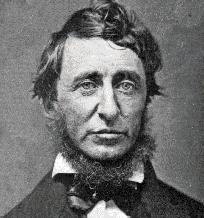 /VIEW-IMAGE/$File/view-image.png "Image information") As Thoreau wrote: "I went to the woods because I wished to live deliberately, to front only the essential facts of life, and see if I could not learn what it had to teach, and not, when I came to die, discover that I had not lived." Like Anthony de Mello, Thoreau realised the importance of awareness in life and how we should not rely on mechanical aids to keep us awake. He asked questions such as "Why should we live life in such hurry and waste life?" and decided life was often frittered away by detail. David Gurteen's comments: This book is an American classic and greatly loved but if you are not an American you may not have come across it. If you enjoy reflecting on life however - it is a "must" read. If you ever get to Boston, take the time (about 45 minutes by car) to travel out to Concord and visit Walden Pond. Even today, it is a beautiful idyllic spot. You can see the remains of Thoreau's original hut and nearby a reconstruction.
Blog Post  This is what blogging is all about .... This is what blogging is all about ....Gurteen Knowledge-Log, David Gurteen, 15 June 2002 Be a Columbus of the mind!Gurteen Knowledge-Log, David Gurteen, 26 February 2005 Famous Trials and John Brown's bodyGurteen Knowledge-Log, David Gurteen, 19 May 2008 What do you think about all day?Posted to Gurteen Knowledge-Log by David Gurteen on 16 July 2012 Do not pursue life sitting upon another man's shouldersPosted to Gurteen Knowledge-Log by David Gurteen on 19 April 2013 Book  Civil Disobedience and Other Essays (1849) by Henry David Thoreau Walden (1854) by Henry David Thoreau Civil Disobedience and Other Essays (1849) by Henry David Thoreau Walden (1854) by Henry David ThoreauLife in the Woods City  Concord (United States > Massachusetts, MA) Concord (United States > Massachusetts, MA)Knowledge-Letter Gurteen Knowledge-Letter: Issue 24 - 6th June 2002Media File  Playlist: Henry David Thoreau Playlist: Henry David ThoreauPerson  Henry David Thoreau (1817 - 1862) American Author Henry David Thoreau (1817 - 1862) American AuthorQuotation  In wildness is the preservation of the world by Henry David Thoreau (1817 - 1862) American Author On aiming above morality by Henry David Thoreau (1817 - 1862) American Author On being a Columbus of the mind by Henry David Thoreau (1817 - 1862) American Author On being a loaffer or a speculator by Henry David Thoreau (1817 - 1862) American Author On being anxious to improve the nick of time by Henry David Thoreau (1817 - 1862) American Author On being busy by Henry David Thoreau (1817 - 1862) American Author On being humane by Henry David Thoreau (1817 - 1862) American Author On being rich and leaving things alone by Henry David Thoreau (1817 - 1862) American Author On building castles in the air by Henry David Thoreau (1817 - 1862) American Author On conscious endeavor by Henry David Thoreau (1817 - 1862) American Author On frittering away life by Henry David Thoreau (1817 - 1862) American Author On grading the whole surface of the planet by Henry David Thoreau (1817 - 1862) American Author On hacking at the branches of evil by Henry David Thoreau (1817 - 1862) American Author On hiring a man by Henry David Thoreau (1817 - 1862) American Author On life and desperation by Henry David Thoreau (1817 - 1862) American Author On life in the woods by Henry David Thoreau (1817 - 1862) American Author On lives of quiet desperation by Henry David Thoreau (1817 - 1862) American Author On living your beliefs by Henry David Thoreau (1817 - 1862) American Author On not being hurried by Henry David Thoreau (1817 - 1862) American Author On not sitting upon another man's shoulders by Henry David Thoreau (1817 - 1862) American Author On the cost of anything by Henry David Thoreau (1817 - 1862) American Author On the perception of truth by Henry David Thoreau (1817 - 1862) American Author To laugh often and much by Ralph Waldo Emerson (1803 - 1882) American Essayist & Poet In wildness is the preservation of the world by Henry David Thoreau (1817 - 1862) American Author On aiming above morality by Henry David Thoreau (1817 - 1862) American Author On being a Columbus of the mind by Henry David Thoreau (1817 - 1862) American Author On being a loaffer or a speculator by Henry David Thoreau (1817 - 1862) American Author On being anxious to improve the nick of time by Henry David Thoreau (1817 - 1862) American Author On being busy by Henry David Thoreau (1817 - 1862) American Author On being humane by Henry David Thoreau (1817 - 1862) American Author On being rich and leaving things alone by Henry David Thoreau (1817 - 1862) American Author On building castles in the air by Henry David Thoreau (1817 - 1862) American Author On conscious endeavor by Henry David Thoreau (1817 - 1862) American Author On frittering away life by Henry David Thoreau (1817 - 1862) American Author On grading the whole surface of the planet by Henry David Thoreau (1817 - 1862) American Author On hacking at the branches of evil by Henry David Thoreau (1817 - 1862) American Author On hiring a man by Henry David Thoreau (1817 - 1862) American Author On life and desperation by Henry David Thoreau (1817 - 1862) American Author On life in the woods by Henry David Thoreau (1817 - 1862) American Author On lives of quiet desperation by Henry David Thoreau (1817 - 1862) American Author On living your beliefs by Henry David Thoreau (1817 - 1862) American Author On not being hurried by Henry David Thoreau (1817 - 1862) American Author On not sitting upon another man's shoulders by Henry David Thoreau (1817 - 1862) American Author On the cost of anything by Henry David Thoreau (1817 - 1862) American Author On the perception of truth by Henry David Thoreau (1817 - 1862) American Author To laugh often and much by Ralph Waldo Emerson (1803 - 1882) American Essayist & PoetQuotations from Walden:  Aim above morality. Be not simply good; be good for somethhing. Aim above morality. Be not simply good; be good for somethhing.Henry David Thoreau, (1817 - 1862) American Author Be a Columbus to whole new continents and worlds within you, opening new channels, not of trade, but of thought. Every man is the lord of a realm beside which the earthly empire of the Czar is but a petty state, a hummock left by the ice. Yet some can be patriotic who have no self-respect, and sacrifice the greater to the less. They love the soil which makes their graves, but have no sympathy with the spirit which may still animate their clay.Henry David Thoreau, (1817 - 1862) American Author No humane being, past the thoughtless age of boyhood, will wantonly murder any creature which holds its life by the same tenure that he does.Henry David Thoreau, (1817 - 1862) American Author I know of no more encouraging fact than the unquestionable ability of man to elevate himself by conscious endeavor.Henry David Thoreau, (1817 - 1862) American Author One says to me, "I wonder that you do not lay up money; you love to travel; you might take the cars and go to Fitchburg to-day and see the country." But I am wiser than that. I have learned that the swiftest traveller is he that goes afoot. I say to my friend, Suppose we try who will get there first. The distance is thirty miles; the fare ninety cents. That is almost a day's wages. I remember when wages were sixty cents a day for laborers on this very road. Well, I start now on foot, and get there before night; I have travelled at that rate by the week together. You will in the mean while have earned your fare, and arrive there some time to-morrow, or possibly this evening, if you are lucky enough to get a job in season. Instead of going to Fitchburg, you will be working here the greater part of the day. And so, if the railroad reached around the world, I think that I should keep ahead of you; and as for seeing the country and getting experience of that kind, I should have to cut your acquaintance altogether. Such is the universal law, which no man can ever outwit, and with regard to the railroad even we may say it is as broad as it is long. To make a railroad round the world available to all mankind is equivalent to grading the whole surface of the planet. Men have an indistinct notion that if they keep up this activity of joint stocks and spades long enough all at length will ride somewhere, in next to no time, and for nothing; but though a crowd rushes to the depot, and the conductor shouts "All aboard!" when the smoke is blown away and the vapor condensed, it will be perceived that a few are riding, but the rest are run over, - and it will be called, and will be, "A melancholy accident," No doubt they can ride at last who shall have earned their fare, that is, if they survive so long, but they will probably have lost their elasticity and desire to travel by that time. This spending of the best part of one's life earning money in order to enjoy questionable liberty during the least valuable part of it, reminds me of the Englishman who went to India to make a fortune first, in order that he might return to England and live the life of a poet. He should have gone up garret at once. "What!" exclaim a million Irishmen starting up from all the shanties in the land, "is not this railroad which we have built a good thing?" Yes, I answer, comparatively good, that is, you might have done worse; but I wish, as you are brothers of mine, that you could have spent your time better than digging in this dirt. Henry David Thoreau, (1817 - 1862) American Author The mass of men lead lives of quiet desperationHenry David Thoreau, (1817 - 1862) American Author I went to the woods because I wished to live deliberately, to front only the essential facts of life, and see if I could not learn what it had to teach, and not, when I came to die, discover that I had not lived. I did not wish to live what was not life, living is so dear; nor did I wish to practise resignation, unless it was quite necessary. I wanted to live deep and suck out all the marrow of life, to live so sturdily and Spartan-like as to put to rout all that was not life, to cut a broad swath and shave close, to drive life into a corner, and reduce it to its lowest terms, and, if it proved to be mean, why then to get the whole and genuine meanness of it, and publish its meanness to the world; or if it were sublime, to know it by experience, and be able to give a true account of it in my next excursion. For most men, it appears to me, are in a strange uncertainty about it, whether it is of the devil or of God, and have somewhat hastily concluded that it is the chief end of man here to "glorify God and enjoy him forever. Henry David Thoreau, (1817 - 1862) American Author The cost of a thing is the amount of what I call life which is required to be exchanged for it, immediately or in the long run.Henry David Thoreau, (1817 - 1862) American Author
|
|
01:20 AM GDT |