
|
|
Book
|
The Power of Mindful Learning by Ellen J. Langer(1997) |

|
|
|
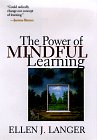 This is a thought provoking book on "education" and "learning" by Ellen Langer.
It argues that traditional methods of learning can produce mindless behaviour because they tend to suggest that there is only one answer to a problem or a single correct way to tackle a task. Ellen argues that it is important to teach skills and facts conditionally, to adopt varying perspectives and to set the stage for doubt and an awareness that different situations may call for different approaches or answers. The book describes seven myths that in the view of the author undermine true learning and discuses how we can avoid their debilitating effects. The myths are:
She has also written a short paper on Mindful Learning. David Gurteen's comments: Whether you agree with all her ideas or not - the book will cause you to question some very deeply held beliefs - something we all need to do from time to time!
Blog Post  Check out Ellen Langer's new book Counterclockwise Check out Ellen Langer's new book CounterclockwisePosted to Gurteen Knowledge-Log by David Gurteen on 24 August 2009 A call for mindful leadershipPosted to Gurteen Knowledge-Log by David Gurteen on 20 May 2010 Does willpower have its limits?Posted to Gurteen Knowledge-Log by David Gurteen on 28 July 2010 To improve learning - don't speak or write with convictionPosted to Gurteen Knowledge-Log by David Gurteen on 23 June 2013 Book  Counterclockwise (May 2009) by Ellen J. Langer Counterclockwise (May 2009) by Ellen J. LangerMindful Health and the Power of Possibility The Power of Mindful Learning (1997) by Ellen J. LangerKnowledge-Letter Gurteen Knowledge-Letter: Issue 3 - 3rd August 2000Person  Ellen J. Langer Professor of Psychology at Harvard Ellen J. Langer Professor of Psychology at HarvardQuotation  On perspective by Ellen J. Langer Professor of Psychology at Harvard On single-minded views by Ellen J. Langer Professor of Psychology at Harvard On perspective by Ellen J. Langer Professor of Psychology at Harvard On single-minded views by Ellen J. Langer Professor of Psychology at HarvardQuotations from The Power of Mindful Learning:  In the perspective of every person lies a lens through which we may better understand ourselves. In the perspective of every person lies a lens through which we may better understand ourselves.Ellen J. Langer, Professor of Psychology at Harvard Not only do we as individuals get locked into single-minded views, but we also reinforce these views for each other until the culture itself suffers the same mindlessness.Ellen J. Langer, Professor of Psychology at Harvard
|
|
12:22 AM GDT |